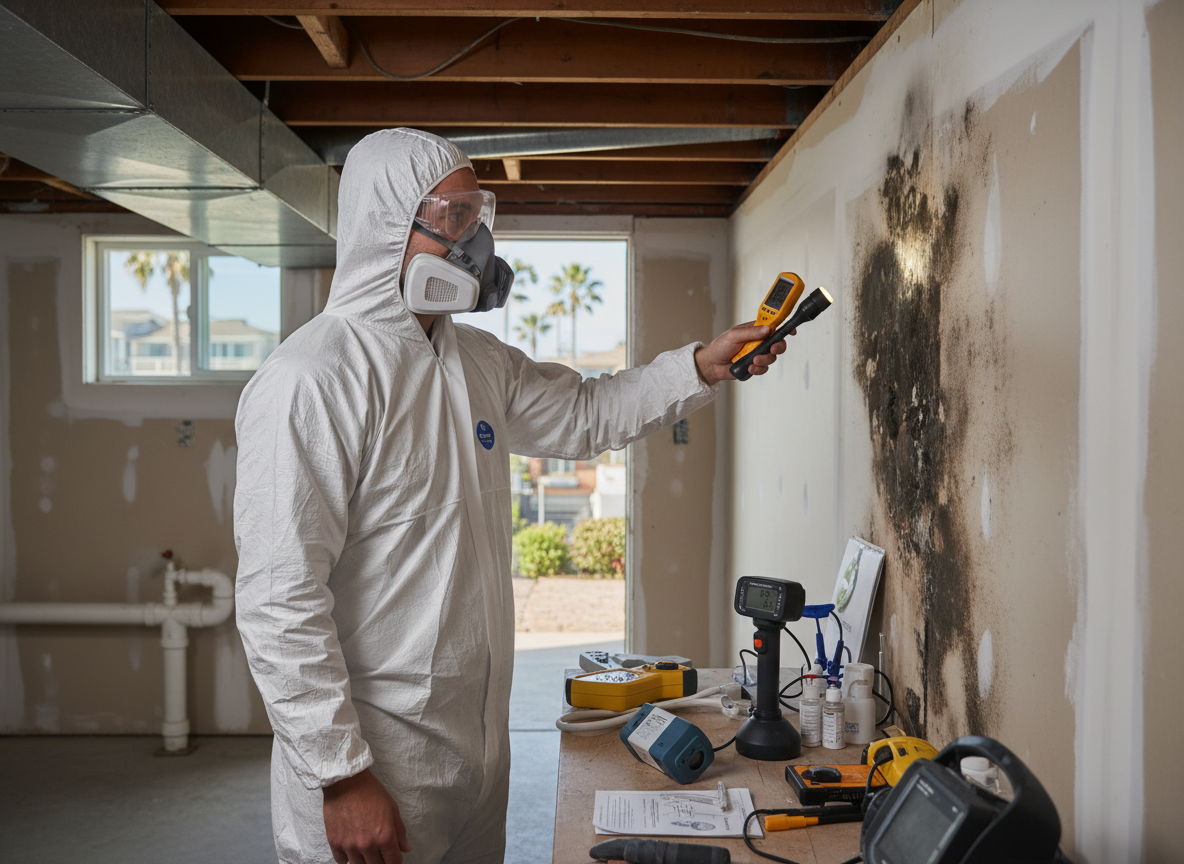
Cardiff By The Sea sits right on the coast where morning fog and salt-laden air keep wood framing and drywall damp longer than inland neighborhoods. Older single-story homes built before 1980 often have crawl spaces with minimal ventilation and original kraft-faced insulation that traps condensation against the soil. During an inspection we use moisture meters and infrared cameras to trace how water from roof valleys or hillside runoff migrates under the slab or into wall cavities that face prevailing winds.
Edge cases appear regularly near Birmingham Drive and along the lagoon edges where high water tables push moisture upward through unsealed concrete. We check HVAC returns that pull air from humid crawl spaces, bathroom exhaust fans venting into attics instead of outside, and stucco cracks that allow wind-driven rain to reach sheathing. These details determine whether a simple surface cleaning will suffice or whether drywall sections and insulation must be removed to stop recurrence.
California building code requires proper ventilation ratios in attics and crawl spaces, yet many Cardiff remodels from the 1990s bypassed those standards when square footage was added. We document clearance gaps, insulation compression, and any prior repairs that used non-breathable materials, giving homeowners a written map they can hand to remediation crews or real-estate agents.
Seasonal Guidance
Fog season from May through July raises relative humidity inside unconditioned spaces, so we schedule more inspections during those months and advise clients to run dehumidifiers in laundry rooms and garages before visible staining appears.
Technician insight
In Cardiff By The Sea the thing that catches most people out with Mold Inspection is the combination of older coastal homes and shallow crawl spaces sitting on clay soils that hold water after winter rains; homeowners often seal the vents thinking it stops drafts, which only traps the fog moisture that rolls in every morning.
Crawl Space Moisture in 1972 Cardiff Home
A homeowner near Birmingham Drive noticed a musty smell after heavy December rain. We found saturated insulation and elevated moisture on the north-side rim joists where the lot slopes toward the lagoon. We mapped the water entry at a cracked foundation vent and recommended targeted removal rather than whole-house remediation. After the report the owners had the section dried and vented correctly with no further growth.
How it works
- 1
Initial Walk-Through
We review the full property at 815 Birmingham Dr address and surrounding streets, noting rooflines, grading, and any visible water stains.
- 2
Moisture Mapping
Infrared and pin meters locate active damp areas in walls, ceilings, and subfloors without cutting finishes.
- 3
Air and Surface Sampling
Optional spore trap or tape-lift samples are taken only when growth is not obvious, then sent to an independent lab.
- 4
Report and Recommendations
Same-day written findings list affected materials, moisture sources, and the exact sequence needed before any remediation starts.
Pricing
Cost depends on square footage, number of stories, and whether attic or crawl space access is required.