2026-10-22 ·
Common Mold Hotspots in Cardiff By The Sea Beachside Homes
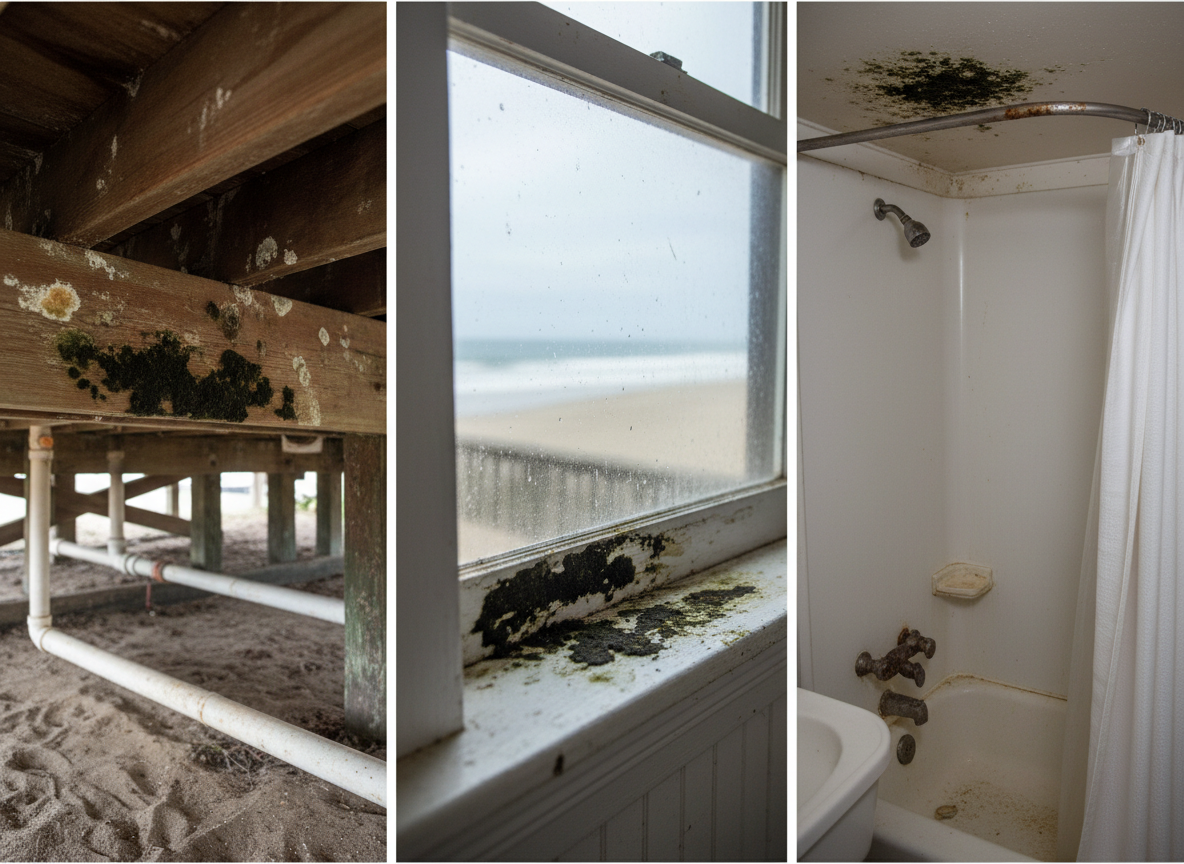
Cardiff By The Sea beachside homes most often see mold growth in attics, bathrooms, crawl spaces, and around windows. Persistent coastal fog and salt air keep surfaces damp longer than inland neighborhoods, allowing spores to settle in poorly ventilated cavities and behind finishes.
Attics and Roof Vents
Beachside attics in Cardiff By The Sea trap moisture when marine layers roll in during spring and fall. Shingle roofs and older ridge vents allow humid air to enter while limited soffit ventilation keeps it inside. Insulation on the attic floor stays cool and condenses water vapor that drips onto ceiling joists. Homeowners notice dark staining on rafters or musty odors when accessing storage. Checking for daylight gaps around vents and ensuring baffles remain clear helps reduce condensation. When growth appears on sheathing or insulation, professional attic mold testing and removal becomes necessary to avoid spreading spores into living spaces. Inspecting Cardiff By The Sea Attics for Mold After Foggy Seasons explains seasonal inspection timing that matches local weather patterns.
Bathrooms and Plumbing Areas
Showers and tubs in Cardiff By The Sea homes sit against exterior walls that stay cooler than interior rooms. Steam from daily use condenses on tile grout and behind vanities where exhaust fans lack sufficient CFM rating. Leaking supply lines under sinks or slow drains in older cast-iron pipes add liquid water that soaks subfloors. Mold appears first as pink or black discoloration along caulk lines and baseboards. Removing the vanity cabinet often reveals hidden growth on the drywall behind. Proper fan runtime after showers and prompt repair of plumbing leaks limit moisture that feeds colonies. When visible growth exceeds a few square feet or returns after cleaning, bathroom mold removal service addresses the source and restores affected materials.
Crawl Spaces and Foundations
Many Cardiff By The Sea homes built before 1980 rest on raised foundations with dirt crawl spaces. Ocean humidity enters through vent openings and condenses on cooler soil and pipes during night hours. Standing water after winter rains or irrigation overspray keeps relative humidity above 70 percent for weeks. Mold grows on floor joists, subfloor undersides, and insulation that sags into contact with soil. Homeowners notice buckling hardwood floors upstairs or persistent earthy smells in closets. Sealing vents, adding vapor barriers, and improving drainage around the perimeter reduce the moisture load. When growth covers framing or insulation, crawl space mold removal restores the space and prevents transfer into living areas above.
Windows, Doors, and Exterior Walls
Single-pane aluminum windows common in Cardiff By The Sea beach cottages create cold surfaces where indoor moisture condenses each night. Fog droplets collect on sills and tracks, soaking drywall returns and wood trim. Stucco cracks or failed sealant around door frames allow wind-driven rain to enter wall cavities. Mold develops behind baseboards and on sheathing within a few seasons. Homeowners see bubbling paint or warped trim as early signs. Replacing weatherstripping, clearing weep holes, and adding interior storm windows reduce condensation points. When growth penetrates the cavity, targeted removal and drying prevent recurrence in these high-exposure locations.