2026-10-22 ·
Inspecting Cardiff By The Sea Attics for Mold After Foggy Seasons
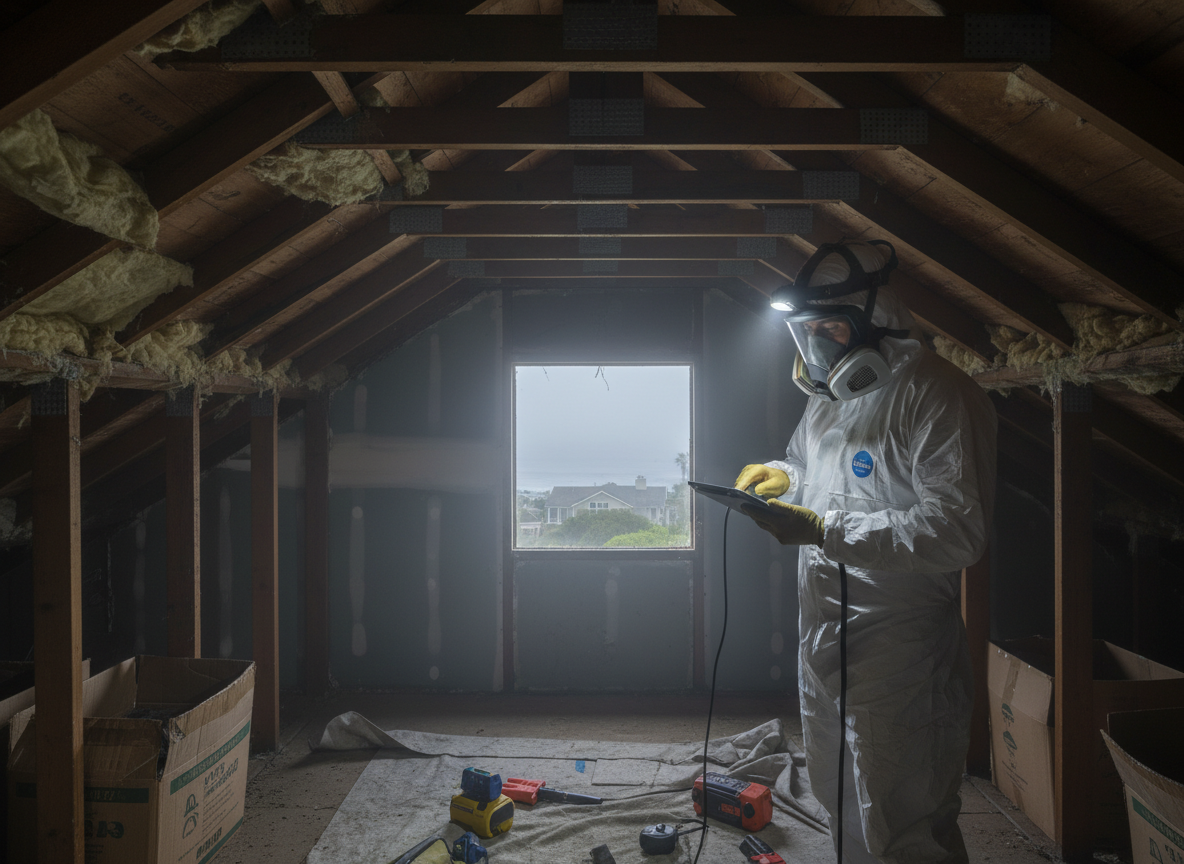
Attics in Cardiff By The Sea homes built before the 1990s commonly show condensation streaks and musty odors after repeated foggy periods because the marine layer holds moisture against roof decks for days at a time. Homeowners on streets like Birmingham Drive notice the issue first in north-facing rafters where airflow stays limited.
How Coastal Fog Affects Attic Conditions in Cardiff By The Sea
Cardiff By The Sea sits directly in the path of Pacific marine layers that roll in most evenings from late spring through early fall. These layers keep relative humidity above 80 percent for extended stretches, allowing roof sheathing to cool below the dew point and form droplets on the underside of shingles. Older homes with single-layer roof vents or blocked soffits trap this moisture longer, giving spores from outdoor air a consistent water source. The result appears as dark staining along collar ties and insulation batts sagging near the ridge. Because Cardiff By The Sea lots often slope toward the ocean, prevailing winds push fog deeper into eaves on the west side of each block, creating uneven drying that favors mold on one half of the attic while the other half stays drier. Residents in nearby Encinitas see the same pattern but report it less often because their homes sit slightly farther from the immediate shoreline.
Visible and Hidden Signs During Post-Fog Inspections
Start at the access hatch and scan rafters for dark discoloration or white powdery residue that reappears within days after wiping. Shine a flashlight along the top plates where insulation meets wood; any gray or black streaks indicate past wetting. Lift a few batts near the eaves to check for dampness or a sour smell that lingers after the hatch is closed. In Cardiff By The Sea attics with blown-in cellulose, look for clumping or dark rings around recessed lights, both signs that roof condensation has migrated downward. Pay attention to metal HVAC ducts running through the space; surface rust or water stains on the insulation wrap usually trace back to the same foggy-season moisture. These clues appear most consistently in homes within a few blocks of the beach where salt air accelerates corrosion on fasteners and vents.
Practical Inspection Steps for Local Homeowners
Work during daylight when the attic is at its driest, usually mid-afternoon after the morning fog has lifted. Wear a respirator and headlamp, then move methodically from the access point toward the ridge, checking every 4 feet. Use a moisture meter on rafters and sheathing; readings above 16 percent warrant further attention even if no visible growth exists. Photograph any staining or wet insulation before disturbing it. Note the condition of ridge and soffit vents, because blocked screens allow fog to enter and then trap it inside. If the attic contains bathroom exhaust fans, verify they terminate outside rather than dumping into the space, a common detail in Cardiff By The Sea remodels from the 1970s and 1980s. Record findings with dates so patterns become clear after multiple foggy seasons.
When Professional Testing Becomes Necessary
If moisture readings stay elevated or visible staining covers more than a few square feet, schedule attic mold testing and removal rather than attempting removal yourself. A targeted inspection can distinguish between surface growth that dries out and active colonies that have penetrated sheathing. Homeowners who also notice recurring odors in living spaces below the attic often benefit from reading Common Mold Hotspots in Cardiff By The Sea Beachside Homes for additional context on how roof moisture travels downward. Professional sampling confirms whether the species present require containment protocols that go beyond simple drying. The team operating from 815 Birmingham Dr remains available 24/7 to respond when homeowners find active growth after an extended foggy stretch.