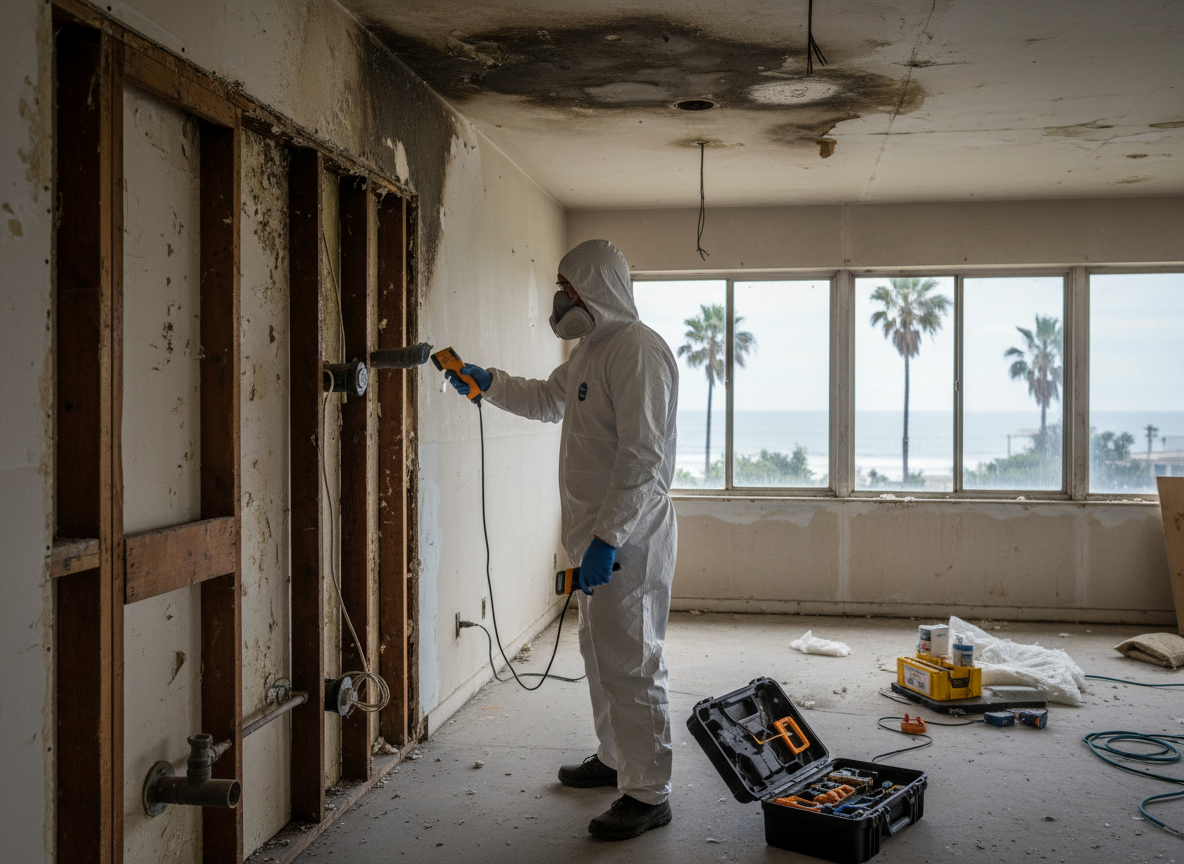
Commercial properties along Birmingham Drive and in the Cardiff Village area often feature older stucco and wood-frame construction from the 1960s onward. Salt-laden ocean air accelerates corrosion on metal HVAC components and window frames, creating condensation points that standard visual checks overlook. Inspectors must use moisture meters and borescopes to examine ductwork and ceiling plenums where fog-driven humidity lingers even after the marine layer burns off.
San Diego County building codes require documentation of moisture intrusion sources before any remediation work starts on commercial sites. In Cardiff By The Sea, this means checking roof-to-wall transitions on single-story retail spaces and restaurants near the lagoon where poor drainage allows water to wick into base plates. Edge cases include mold behind vinyl wall coverings in restrooms or inside walk-in coolers where temperature differentials create hidden condensation.
Inspection reports for local businesses must note ventilation rates and any prior water events from plumbing or roof leaks common in the coastal microclimate. Technicians flag areas where tenant improvements have sealed off original weep holes or blocked crawlspace vents, trapping moisture against slab foundations. These details directly influence whether containment and air scrubbing are needed before any removal work.
HVAC and Ductwork Focus
Coastal humidity in Cardiff By The Sea forces extra scrutiny of rooftop units and supply ducts where salt deposits combine with condensate to foster growth inside insulation liners.
Technician insight
In Cardiff By The Sea, the thing that catches most people out with Commercial mold inspection is how the constant marine layer keeps interior humidity above 60 percent in single-story retail spaces even on sunny days, allowing mold to grow inside wall cavities behind new paint that owners assume fixed the problem.
Retail Space Near the Beach
A Cardiff Village clothing store reported musty smells after a roof leak. Inspection found elevated moisture in the north wall where salt air had corroded the window frame and allowed water to enter the insulation. We mapped the affected studs, sampled the cavity, and confirmed Penicillium growth before handing off to remediation crews who removed the damaged section and improved ventilation.
How it works
- 1
Initial Walkthrough
Document visible water stains, musty odors, and HVAC layout in the Cardiff By The Sea commercial space.
- 2
Moisture Mapping
Use meters and infrared to locate hidden damp areas behind walls and above ceilings without demolition.
- 3
Air and Surface Sampling
Collect targeted samples from suspect zones and compare to outdoor baselines for accurate species identification.
- 4
Report and Recommendations
Deliver written findings with photos, moisture readings, and prioritized next steps for remediation.
Pricing
Pricing varies by square footage, number of HVAC zones, and access difficulty in older Cardiff By The Sea buildings.