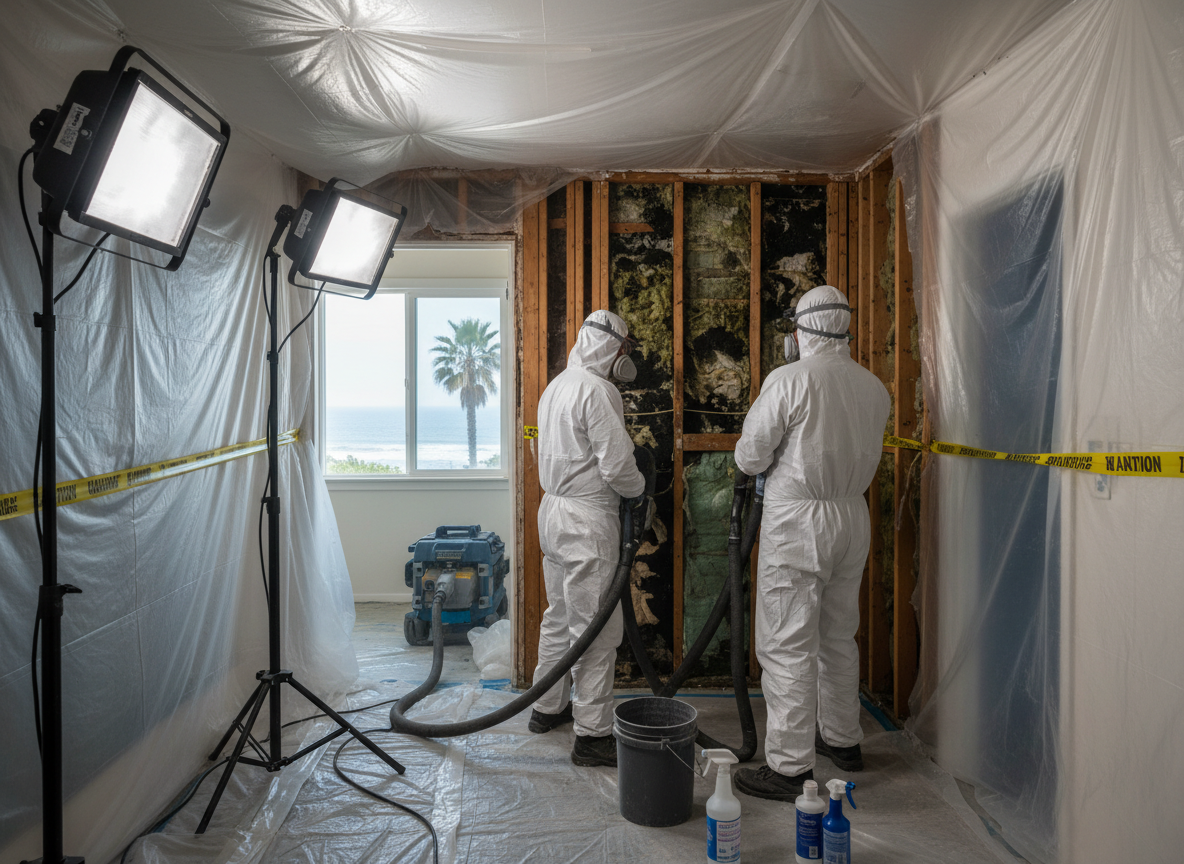
Cardiff By The Sea homes often sit close to the shoreline where salt-laden air and frequent marine layer moisture create persistent humidity inside wall cavities and attics. Older single-story ranch houses common along Birmingham Drive and adjacent streets frequently have original stucco and lath construction that traps water from roof leaks or window condensation. A thorough remediation begins with moisture mapping using infrared cameras to locate hidden growth without unnecessary demolition.
Containment protocols must account for the compact lot sizes typical in Cardiff where neighboring homes sit only a few feet apart. Negative air machines and sealed barriers prevent spores from drifting into adjacent properties during removal. After source correction, HEPA vacuuming and antimicrobial application target porous materials like drywall that absorb salt spray and hold moisture longer than inland homes.
Homeowners in the Cardiff By The Sea area sometimes discover mold after noticing musty odors near HVAC returns or under kitchen sinks where coastal fog keeps crawl spaces damp year-round. Proper remediation includes removing affected insulation and verifying that wood framing has dried below 12 percent moisture content before any new materials are installed. This step prevents rapid regrowth once the marine humidity returns.
Post-Remediation Verification
Independent air sampling after work confirms spore counts match outdoor levels before clearance is issued. Documentation of every step helps homeowners with future real estate transactions common in the Cardiff market.
Technician insight
In Cardiff By The Sea, the thing that catches most people out with mold remediation company is how the constant salt air keeps framing damp long after a roof leak is fixed. Homeowners often stop too soon because they cannot see the moisture trapped behind stucco on homes built in the 1960s along Birmingham Drive.
Ocean-View Home Attic Growth
A Cardiff By The Sea homeowner noticed a musty smell in the hallway after winter rains. Inspection found mold on roof sheathing where marine fog had entered through a cracked ridge vent. Crew contained the attic, removed affected insulation, dried the sheathing, and sealed the vent. Follow-up testing showed spore levels returned to normal outdoor counts.
How it works
- 1
Initial Inspection
Technicians arrive within hours to map moisture sources and identify visible and hidden mold using meters and cameras.
- 2
Containment Setup
Plastic barriers and negative air pressure isolate the work zone to protect the rest of the Cardiff By The Sea home.
- 3
Removal and Cleaning
Affected materials are removed, surfaces are HEPA cleaned, and antimicrobial treatments are applied where appropriate.
- 4
Drying and Verification
Dehumidifiers bring moisture levels down, followed by clearance testing before barriers come down.
- 5
Prevention Recommendations
Written guidance covers ventilation upgrades and drainage fixes that address the specific coastal conditions in Cardiff.
Pricing
Upfront quotes provided after inspection based on square footage and access conditions.