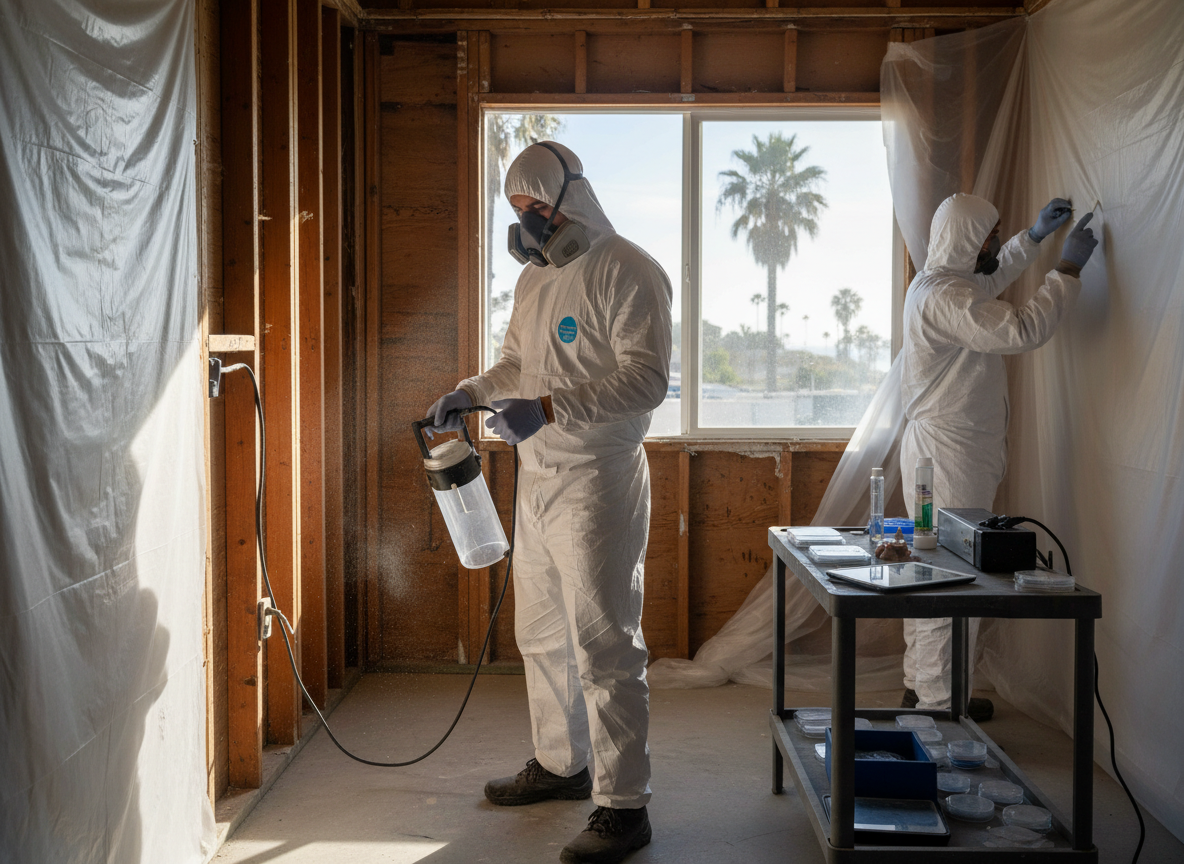
Post remediation mold testing requires careful air and surface sampling after initial removal work to detect any remaining spores or hidden growth. In Cardiff By The Sea homes built near the ocean, older stucco construction and frequent marine layer moisture often leave residual dampness behind walls or in attics that standard remediation may miss. Technicians use moisture meters and thermal imaging to locate these pockets before taking samples from multiple rooms, including HVAC returns that can spread contaminants through the house.
Sampling protocols follow industry standards for both viable and non-viable spore counts, with results compared against outdoor baselines taken the same day. Cardiff By The Sea's mild but humid climate means even small undetected leaks from roof valleys or bathroom exhausts can allow rapid regrowth within weeks. Lab reports detail genus-level identification so homeowners know whether the original species has returned or if new moisture sources have introduced different molds.
Clearance criteria typically require indoor spore levels at or below outdoor readings with no dominant water-damage indicators present. Edge cases in the area include crawl spaces under raised foundations along Birmingham Drive where salt air accelerates corrosion of metal ductwork, creating condensation points that testing must specifically target. Documentation from this step protects against future disputes with insurers or real estate transactions.
Technician insight
In Cardiff By The Sea, the thing that catches most people out with post remediation mold testing is the marine layer that keeps crawl spaces and wall cavities damp long after the visible mold is gone, especially in 1960s-1970s homes along Birmingham Drive where original weep holes have clogged with salt residue.
Hidden Moisture in Cardiff By The Sea Bungalow
After remediation of a bathroom leak, the homeowner requested clearance testing. Samples showed elevated aspergillus levels in the hallway despite clean visual results. Further inspection located condensation on HVAC ducts running through the unconditioned attic, a common issue in the area's foggy climate. Additional drying and one targeted sample round confirmed clearance.
How it works
- 1
Initial Assessment
Technician performs a visual and moisture inspection of previously treated areas, checking for new water intrusion points common in Cardiff By The Sea coastal homes.
- 2
Sample Collection
Air and surface samples are collected from multiple interior zones plus an outdoor control, using calibrated pumps and sterile media.
- 3
Laboratory Analysis
Samples are sent to an accredited lab for spore count, species identification, and comparison against outdoor baselines.
- 4
Report Delivery
A detailed written report with findings, photos, and clearance status is provided within 48 hours of lab results.
Pricing
Pricing varies by property size, number of samples required, and access conditions in Cardiff By The Sea homes.