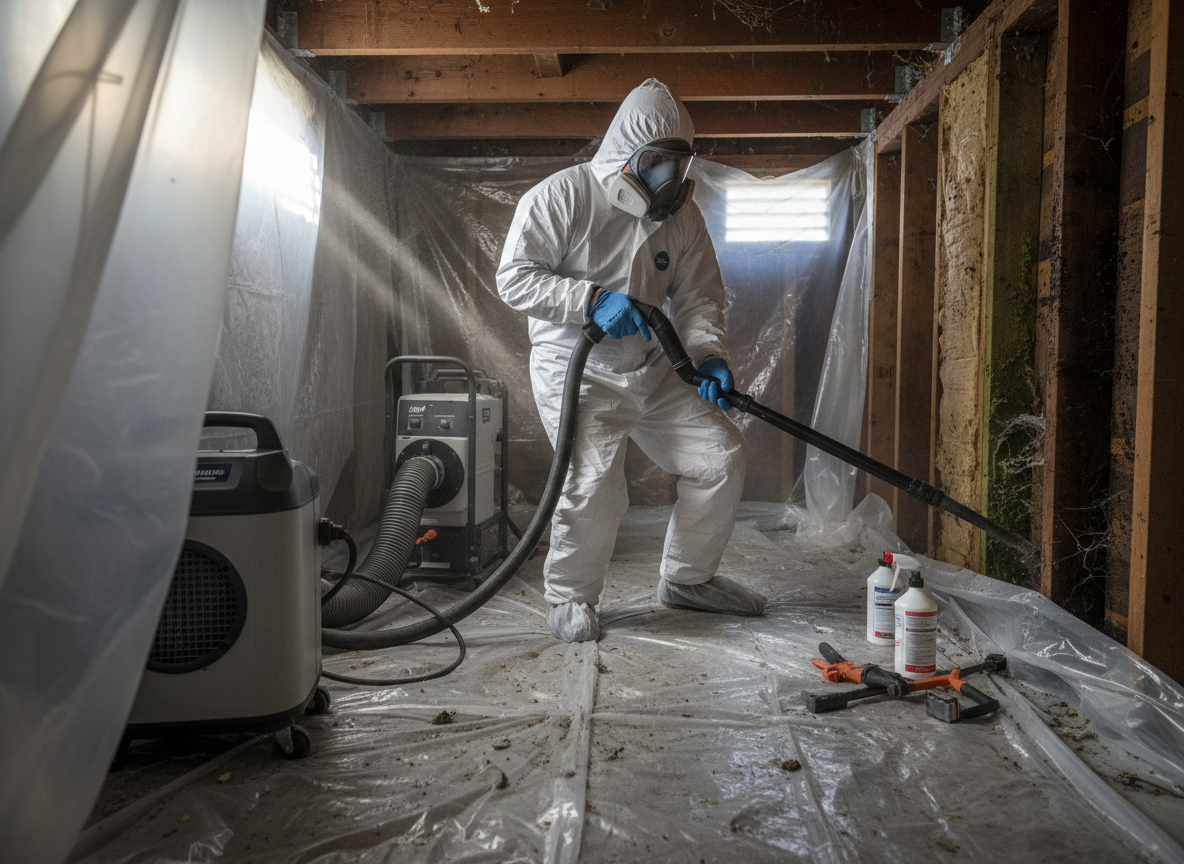
Cardiff By The Sea homes built before the 1980s often feature wood-framed walls and crawl spaces that trap salt-laden air from the Pacific. When roof leaks or window condensation go unnoticed, mold colonies form behind baseboards and in insulation. Professional mold removal starts with moisture mapping using infrared tools to locate every affected cavity without unnecessary demolition. Containment barriers and negative air machines keep spores from spreading into living areas during the work.
Removal focuses on cutting out porous materials like drywall and carpet padding that cannot be salvaged, followed by HEPA vacuuming and antimicrobial treatment on framing. In Cardiff By The Sea, the marine layer keeps relative humidity elevated most mornings, so drying equipment must run longer than inland jobs to reach safe moisture levels. Technicians check HVAC ducts and attic insulation because spores travel through shared walls between neighboring bungalows.
Final clearance testing confirms spore counts match outdoor baselines before any reconstruction. Homeowners receive a written report noting exact locations treated and any remaining structural concerns that require a carpenter or roofer. This documentation helps when selling property in the Cardiff By The Sea area where buyers routinely request mold disclosures.
Technician insight
In Cardiff By The Sea, the thing that catches most people out with professional mold removal is how the morning marine layer keeps crawl spaces and wall cavities damp long after a roof leak is fixed; homeowners often stop drying too soon and the same wall grows back within a season.
Hidden mold behind a bathroom vanity
A homeowner noticed musty smell near the tub but no visible water. Inspection found elevated moisture in the subfloor from a slow drain leak. We removed the vanity base, cut out saturated plywood, treated the joists, and ran drying equipment for four days until readings normalized. Clearance passed and the odor disappeared.
How it works
- 1
Initial Assessment
Technician inspects all accessible areas with moisture meters and thermal imaging to map the full extent of growth.
- 2
Containment Setup
Plastic barriers and negative air filtration isolate the work zone so spores stay out of occupied spaces.
- 3
Material Removal
Affected drywall, insulation, and trim are cut out and bagged for disposal following local landfill rules.
- 4
Cleaning and Drying
HEPA vacuuming, surface treatment, and dehumidifiers bring moisture content below 15 percent before clearance testing.
Pricing
Cost depends on square footage affected, access difficulty, and drying time required; upfront quotes given after inspection.