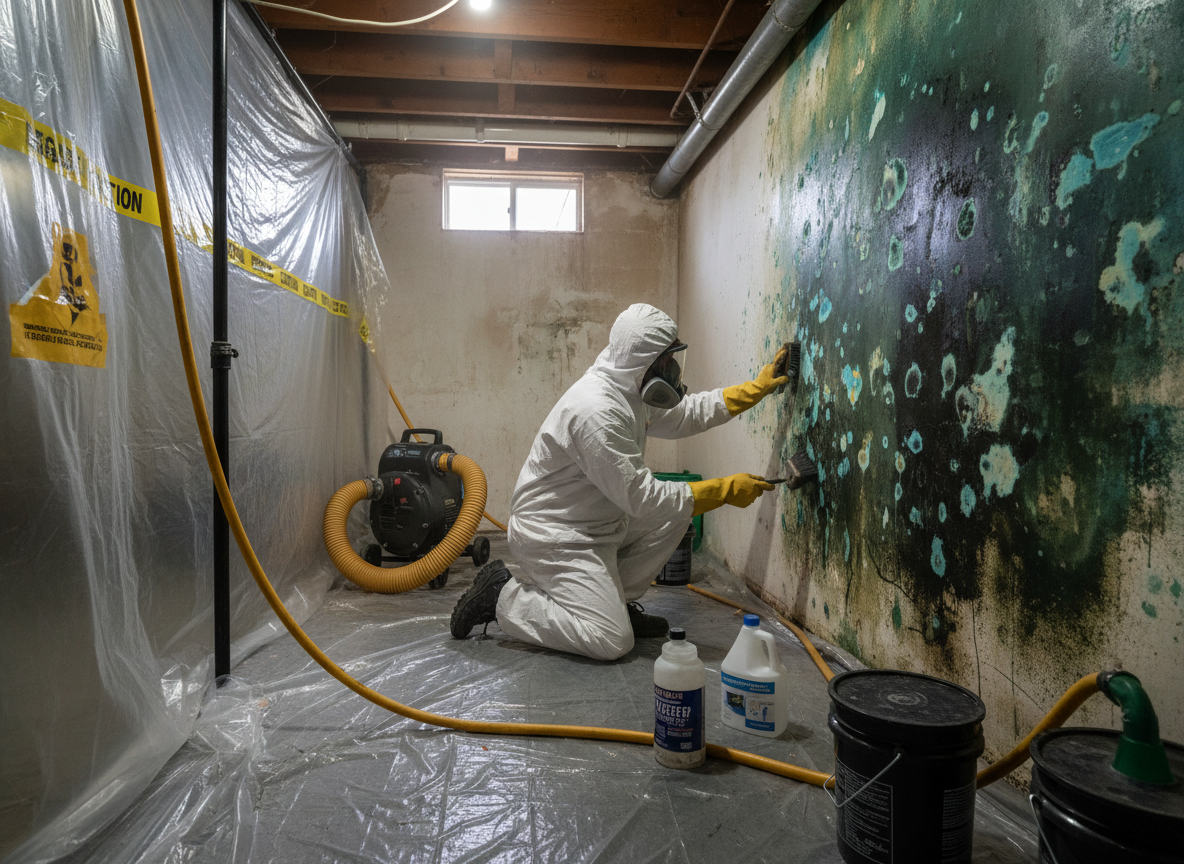
Toxic mold removal in Cardiff By The Sea often starts with moisture that enters through older stucco and wood-framed homes built near the shoreline. Salt air keeps framing lumber damp even after leaks are fixed, allowing Stachybotrys and other species to colonize behind baseboards and under flooring. Technicians must isolate rooms with negative air machines and remove affected drywall in sections rather than attempting surface cleaning that leaves roots behind.
Access is the real variable on these jobs. Many Cardiff By The Sea properties have low crawl spaces or converted garages where HVAC ducts run close to soil. When water from irrigation or roof valleys reaches those ducts, mold travels through the entire supply system. Containment barriers and HEPA filtration are set before any demolition to keep spores from migrating to unaffected rooms.
After removal, the focus shifts to drying verification. Cardiff By The Sea homes can re-wet quickly if dehumidifiers are pulled too soon because evening marine layers raise indoor humidity. Final clearance testing checks both air and surface samples from multiple rooms plus the HVAC system to confirm the property meets post-remediation standards before rebuild begins.
Technician insight
In Cardiff By The Sea, the thing that catches most people out with toxic mold removal is hidden growth along the bottom plates of 1970s beach cottages where the crawl space sits only eighteen inches off sandy soil. Evening marine layers keep that space humid long after any roof leak is fixed, so homeowners who only treat visible ceiling spots watch it return within months.
Hidden Growth Behind Kitchen Cabinets
A Cardiff By The Sea homeowner noticed a musty smell after a dishwasher leak. Inspection found black growth on the drywall behind the cabinets and extending into the crawl space. We contained the kitchen, removed the lower cabinets and affected framing, dried the joists, and cleared the space with follow-up testing before the cabinets were reinstalled.
How it works
- 1
Inspection and Containment
Technicians map moisture with meters and borescopes, then seal off work zones with plastic sheeting and negative air to prevent cross-contamination.
- 2
Source Removal
Affected materials are cut out and bagged on site, including any insulation or trim that shows visible growth or elevated moisture readings.
- 3
Cleaning and Drying
HEPA vacuuming and antimicrobial treatment are followed by commercial dehumidifiers and air movers until wood moisture content returns to acceptable levels.
- 4
Verification
Independent air and surface samples are collected and sent for lab analysis before any reconstruction or final walkthrough.
Pricing
Cost depends on square footage affected, depth of hidden growth, and whether HVAC cleaning is required.